


7 Things You Need to Know Before Getting a Hunting Line Labrador

A hunting line Labrador can look like the perfect dog on paper: friendly, athletic, smart, eager to please, and beautiful in motion. Then the puppy comes home and starts retrieving socks, launching into puddles, chewing through boredom, and staring at the back door like the day has not officially started until something exciting happens.
That is not a flaw. That is the dog doing what generations of selective breeding shaped it to do.
Hunting line Labradors, often called field-bred Labradors, are usually bred for drive, stamina, trainability, and work. Many make wonderful family dogs, but they are not a low-effort version of the Labrador people imagine from movies and greeting cards. They need structure, movement, mental work, and clear expectations.
Before getting one, it helps to understand what life with this kind of Labrador actually feels like day to day.

Know what makes a hunting line Labrador different
Not every Labrador is the same. The breed has different types and purposes, and those differences matter.
A typical show or bench line Labrador is often bred with more focus on conformation, a heavier build, and a calmer household presence. A hunting line Labrador is usually bred for field work. That often means a leaner body, longer legs, higher energy, stronger retrieving instinct, and more intensity around birds, water, movement, and scent.
This does not mean one type is “better.” It means the fit is different.
A hunting line Lab may be:
Faster to react to movement
More persistent when working through a task
More interested in retrieving and carrying objects
More driven around water, birds, and scent trails
Less satisfied with casual backyard time
More likely to become restless without a job
The key word is drive. Drive is the internal push that makes the dog want to do something again and again. In the right setting, it is amazing. In the wrong setting, it becomes frustration.
A field-bred Lab can still be gentle, affectionate, silly, and loyal. Many are wonderful with children when raised and supervised well. But their energy does not disappear just because the family wants a quiet evening.
If the goal is a calm companion that needs only short walks and couch time, a hunting line may not be the easiest path. If the goal is an active partner for training, hiking, hunting, dock diving, scent games, or advanced obedience, this type can be a joy.
Expect energy that needs a real outlet
A hunting line Labrador usually needs more than a stroll around the block. Physical exercise matters, but mental work matters just as much.
A young field Lab with no plan for the day will often create one. That plan may include counter surfing, stealing laundry, barking at birds, digging, jumping on guests, or turning a shoe into a puzzle toy.
A better daily rhythm includes short, focused sessions that give the dog a clear job.
Useful outlets include:
Retrieving drills in a safe area
Structured leash walks with training mixed in
Swimming when conditions are safe
Scent games in the yard or house
Place training and impulse control work
Food puzzles and search games
Field training with a skilled trainer
Obedience classes that reward focus and control
The mistake many owners make is chasing exhaustion. They try to tire the dog out with nonstop running. That can build a stronger athlete without teaching an off switch.
A better goal is balanced fatigue. The dog gets enough movement, but also learns to settle. Ten minutes of thoughtful training can tire the brain more than a long walk where the dog pulls from start to finish.
For puppies, exercise should be age-appropriate. Growing joints need care, so forced long-distance running or repeated high-impact jumping is not a good idea. Short, positive sessions are better than weekend marathons.
A sample day for an adult hunting line Lab might look like this:
Morning | Midday | Evening |
Brisk walk with obedience practice | Food puzzle or short scent game | Retrieve work, training class, or structured play |
Calm rest afterward | Crate or place time | Relaxation practice after exercise |
The details will vary, but the principle stays the same. This dog needs both action and recovery.

Training has to start early and stay consistent
Hunting line Labradors are often very trainable, but trainable does not mean automatically well behaved. Smart, driven dogs learn fast. They learn the desired habits and the unwanted ones.
Start with basics, then build slowly:
Name recognition
Recall
Loose-leash walking
Sit, down, and stay
Leave it
Drop it
Place or mat training
Calm greetings
Waiting at doors
Handling for grooming and vet care
The most valuable skill for many hunting line Labs is impulse control. These dogs often see something they want and want it now. A bumper thrown across the yard, a bird lifting from the grass, a child running with a ball, or another dog at the park can become a powerful trigger.
Impulse control does not mean crushing enthusiasm. It means teaching the dog to think before acting.
For example, a young Lab can learn that a retrieve only happens after sitting calmly. The reward is the work itself. That lesson turns excitement into focus.
Retrieving games need rules from the beginning. If the puppy grabs the bumper and plays keep-away, avoid turning it into a chase. Trade for a treat, praise the return, and keep sessions short. Quit while the puppy still wants more.
Training should be positive, clear, and consistent. Harsh handling can damage trust and create confusion. On the other hand, a lack of boundaries can make the dog pushier. The sweet spot is firm structure with fair rewards.
Crate training can help, too. A crate is not a substitute for exercise, but it can teach rest, prevent destructive rehearsals, and give the dog a safe place to settle.
If the goal includes real hunting work, find a trainer or club that understands retrievers. Field training has layers: steadiness, marking, delivery to hand, handling, water confidence, and safe exposure to gunfire. Those steps should not be rushed.
Be ready for mouthiness, carrying, and chewing
Labradors were bred to retrieve. Their mouths are part of the job. A hunting line Lab may carry toys, sticks, shoes, towels, gloves, remote controls, and anything else that feels worth collecting.
For many owners, this is funny until it becomes expensive or dangerous.
Puppies explore with their mouths. Field-bred Labs may do it with extra enthusiasm. The goal is not to stop the dog from using its mouth at all. The goal is to teach what is allowed.
Set the house up for success:
Keep shoes, socks, and small objects out of reach
Offer safe chew items and rotate them
Use baby gates or pens during the puppy stage
Teach drop it and trade early
Reward the dog for choosing approved toys
Supervise around children’s toys, food wrappers, and laundry
Do not punish a puppy for picking things up after the fact. The dog will not connect the correction with the original choice. Worse, it may learn to run away when it has something valuable.
Teach a trade instead. When the puppy has an object, offer a treat or approved toy. Say “drop” once, reward the release, then redirect. Over time, the dog learns that giving things up is safe and rewarding.
This also matters for field work. A good retriever needs a soft, reliable hold. Tugging items out of the mouth or creating conflict over retrieves can cause problems later.
If chewing becomes intense, look at the bigger picture. Is the dog teething? Under-exercised? Over-tired? Left loose too long? Hungry for mental work? Chewing is often a symptom, not the whole problem.

Health, structure, and genetics matter more than color
Color gets a lot of attention in Labradors, but color should not drive the decision. Temperament, health testing, structure, and breeder ethics matter much more.
Labradors can be prone to several inherited or common health concerns, including hip and elbow dysplasia, certain eye conditions, exercise-induced collapse, and ear issues. Not every dog will face these problems, but responsible breeding reduces risk.
Ask breeders about health testing. A serious breeder should be willing to discuss the health of the parents, the purpose of the breeding, and what traits they expect from the litter. They should also ask questions about your life, not just whether you can pay a deposit.
Look for a breeder who can explain:
The working style of both parents
Health clearances and genetic screening relevant to Labradors
Temperament in the home and field
How puppies are raised and socialized
What kind of owner is a good fit
Whether they offer support after the puppy goes home
Avoid choosing only by photos. A puppy may be beautiful and still be a poor match for the household.
Also be careful with extreme claims. No breeder can promise perfect health, a guaranteed hunting champion, or a puppy that will be both highly driven in the field and effortless in a quiet home. Dogs are living animals, not custom products.
Structure matters for an athletic dog. A hunting line Lab may spend years running, swimming, jumping into vehicles, and working over rough ground. Good build, healthy weight, and steady conditioning all help protect the dog over time.
Weight management is especially important. Labradors often love food, and extra weight stresses joints. Use meals for training, measure food, and keep treats reasonable.
Socialization should build confidence, not chaos
Socialization does not mean letting the puppy meet every dog, person, and child in sight. It means helping the puppy learn that the world is safe, normal, and manageable.
A hunting line Lab may be naturally bold, but bold puppies still need thoughtful exposure. They should see different surfaces, sounds, places, people, and animals in a controlled way.
Good socialization includes:
Calm car rides
Vet office visits with treats
Walking near traffic at a safe distance
Hearing household sounds
Meeting polite, vaccinated dogs
Seeing people with hats, strollers, bikes, and canes
Walking on grass, gravel, wood, and slick floors
Relaxing while life happens nearby
The goal is calm curiosity, not wild excitement.
For example, taking a puppy to a park and letting every stranger pet it may create a dog that expects to pull toward every person. A better plan is to sit at a distance, reward calm attention, and allow short greetings with polite people when the puppy is relaxed.
The same applies to other dogs. Dog parks are not always the best place for a young retriever. Chaotic play can teach rude habits, and bad experiences can leave a mark. Controlled puppy classes or small play sessions with stable dogs are often safer.
A well-socialized hunting line Lab should be able to work around distractions. That matters in the field, in public, and at home.
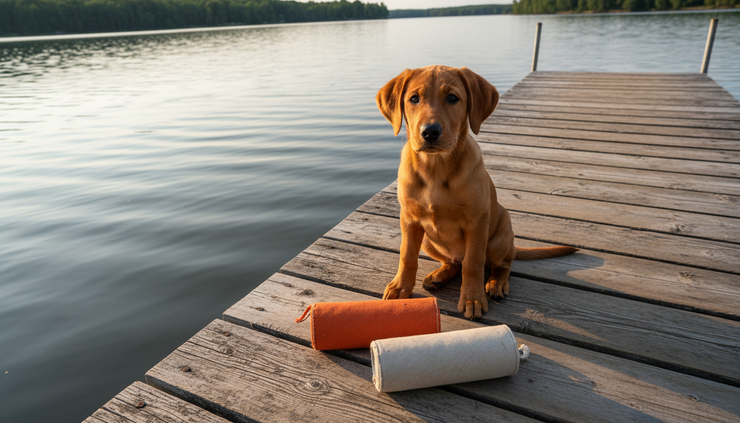
Your lifestyle has to match the dog after puppyhood
Puppies are demanding, but the real question is whether the adult dog fits your life.
A hunting line Labrador may be easier after maturity, but it will still need regular work. Many remain playful, energetic, and eager for activity well into adulthood. If weekday life is packed and the dog will spend long hours alone with little training, behavior problems can build.
Before getting one, be honest about these points:
Daily time for exercise
Interest in training beyond basic commands
Access to safe outdoor areas
Comfort with mud, water, hair, and gear
Budget for food, vet care, equipment, and classes
Plans for travel, workdays, and emergencies
Patience for adolescence, which can test training
Adolescence can surprise people. A puppy that followed every cue at four months may start testing boundaries at nine months. That stage is normal. It calls for consistency, not panic.
Hunting line Labs can thrive in family homes, but they need participation. They are not dogs to admire from the couch while they entertain themselves. They want to be involved.
This does not mean the owner must be a hunter. Many field-bred Labs do well in active non-hunting homes that provide sports, training, and structure. Possible outlets include hunt test training, agility, rally, dock diving, tracking, search games, or advanced obedience.
The important part is purpose. Give the dog work that uses its brain and body, and life gets much smoother.
The right Labrador is worth waiting for
A hunting line Labrador can be an incredible companion: loyal, joyful, athletic, and deeply connected to its people. The same traits that make the dog challenging can also make it unforgettable.
The best match starts before the puppy comes home. Learn the lines. Talk to breeders. Meet adult relatives when possible. Ask about drive, not just cuteness. Plan for training, not just supplies. Think about the adult dog, not only the puppy.
If the idea of daily training, muddy paws, wet retrieves, and an eager dog waiting for the next task sounds exciting, a field-bred Lab may be exactly the right fit. If that sounds exhausting, there is no shame in choosing a calmer line or a different breed.
A good decision protects both sides. The dog gets the life it was bred to enjoy, and the household gets a companion that truly belongs there.

Comments